Below you will find pages that utilize the taxonomy term “art history”
Posts
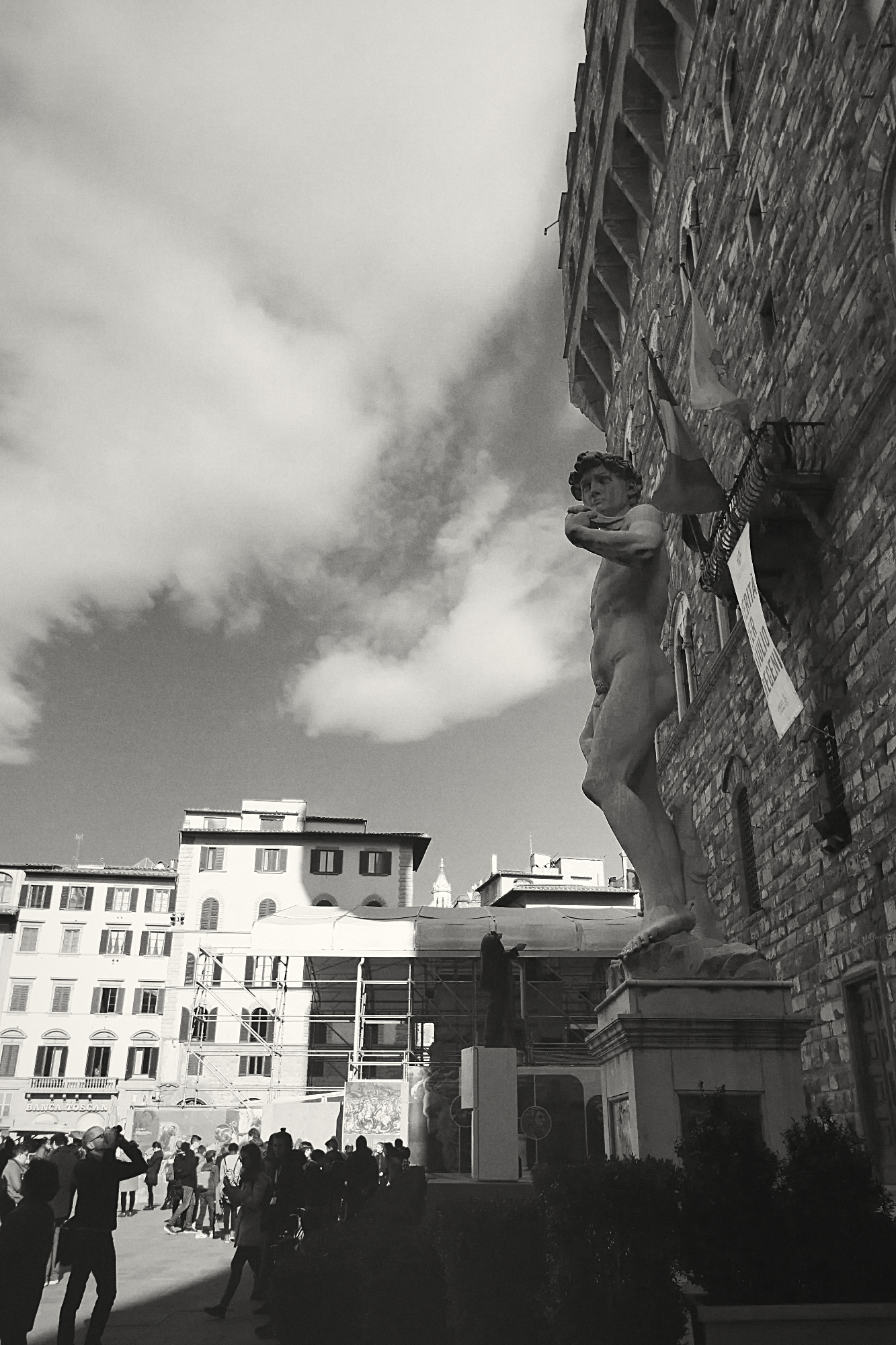
Black and White Photographs Built Modern Art History: Malraux and the Museum Without Walls
Almost everything most people know about art, they know from reproductions. Not from standing in front of the object, but from a plate in a book, a slide in a lecture hall, a poster on a wall, a screen. André Malraux gave that condition a name in 1947 and called it the museum without walls: a collection nobody owns, assembled out of photographs, in which a Sumerian seal and a Gothic tympanum and a Florentine marble sit on facing pages as equals.
Posts
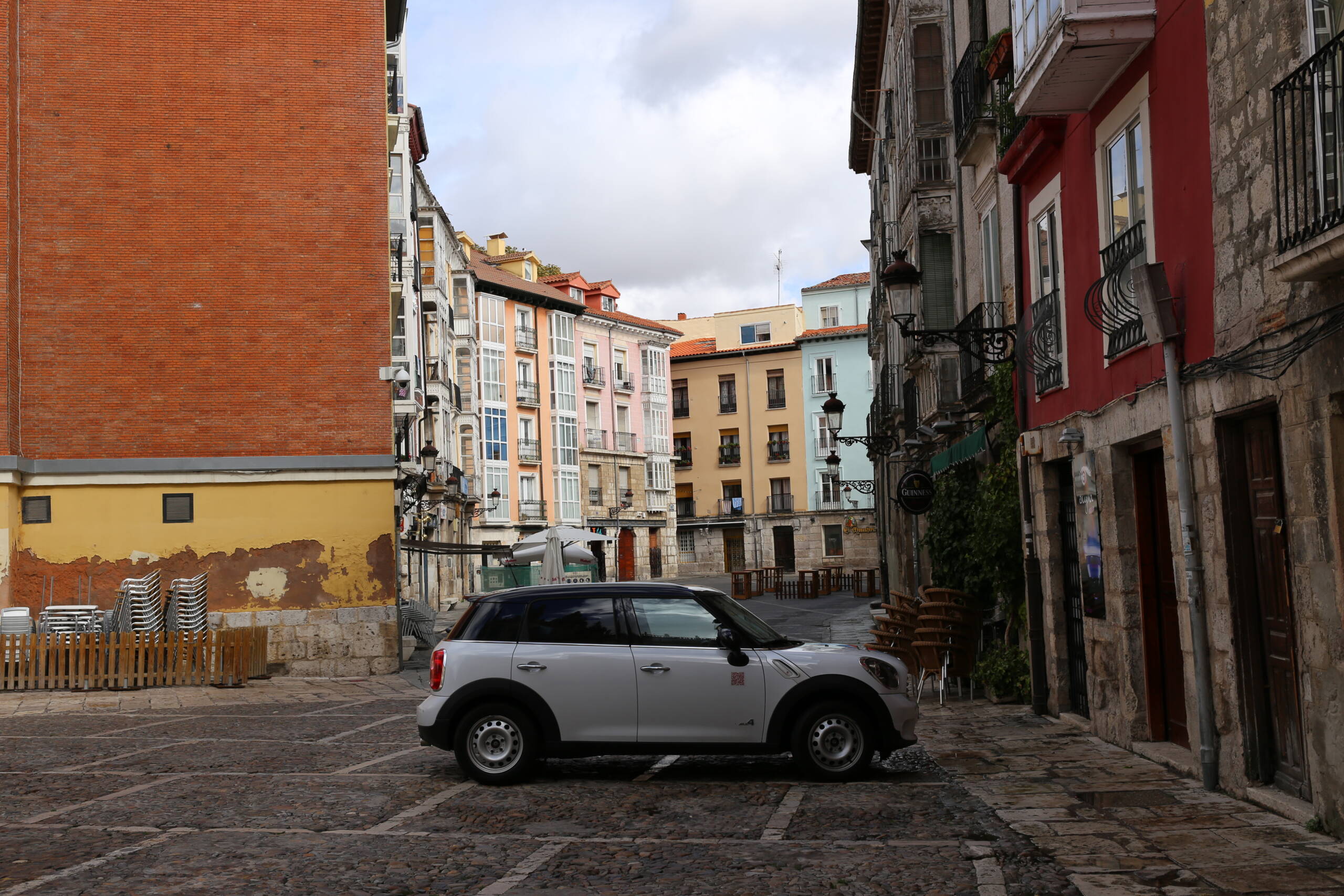
Burgos, De Chirico and Antonio López: How the Empty Street Became a Subject
A cobbled slope in Burgos, somewhere in the lanes below the cathedral. Stacked café chairs behind a low fence on the left. A furled umbrella out in the middle distance. One white Mini parked across the frame like it was left there by accident. Flat overcast, no shadows worth the name, and not a single person in a picture that contains perhaps two hundred windows.
Painters spent most of European history treating a street as a container for events.
Posts
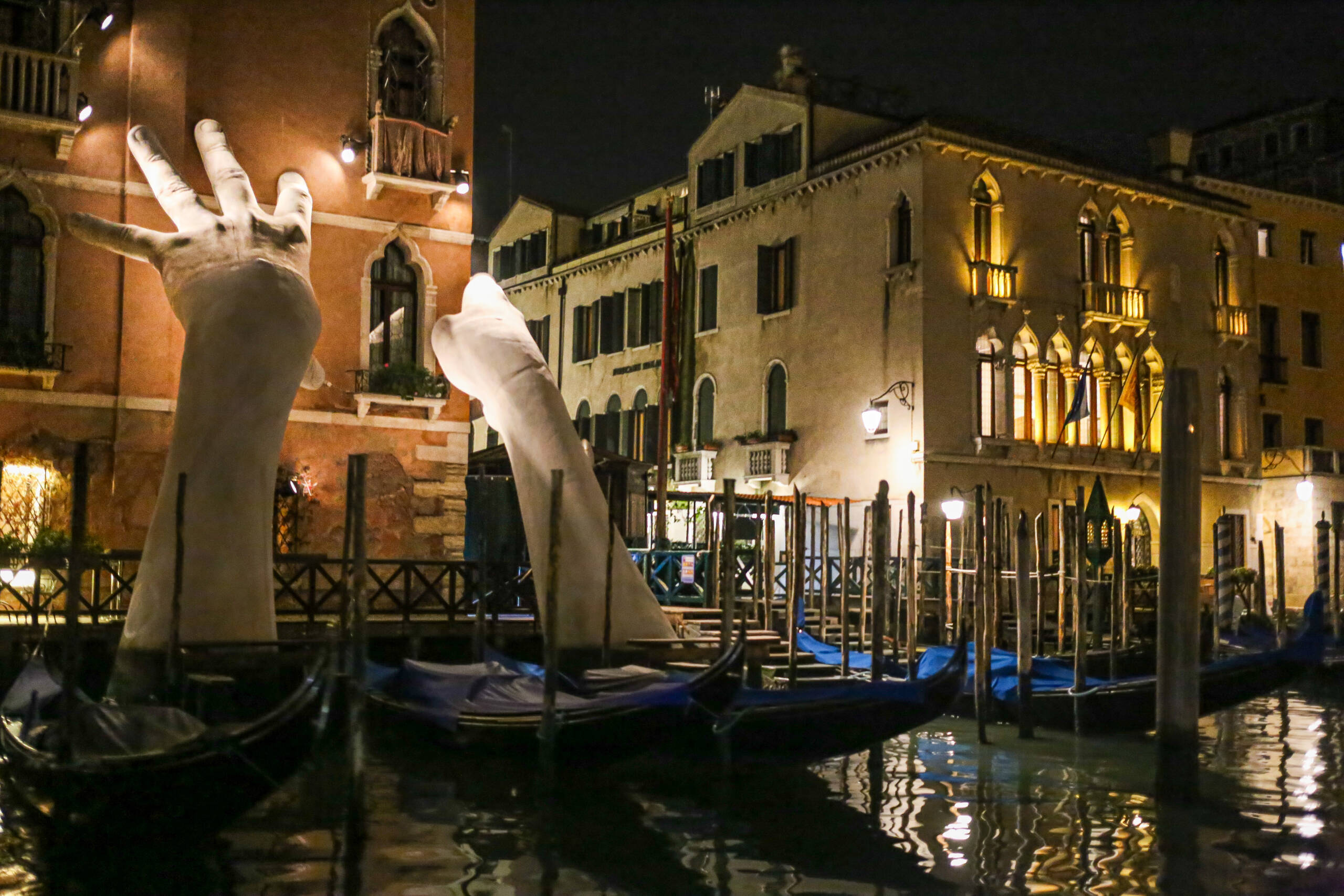
Lorenzo Quinn's Support in Venice: The Biennale Said No and the Photographs Said Yes
Two white hands come up out of the Grand Canal at night, lit hard from above, with the moored gondolas under their blue covers sitting between them and the camera. The palazzo behind is doing what Venetian palazzi do at that hour, which is glow. Nobody in the frame. Just the hands, the boats, the water shivering the lights back at you.
The piece is Lorenzo Quinn’s Support, installed against the corner of Ca’ Sagredo in May 2017 and left up until late November.
Posts
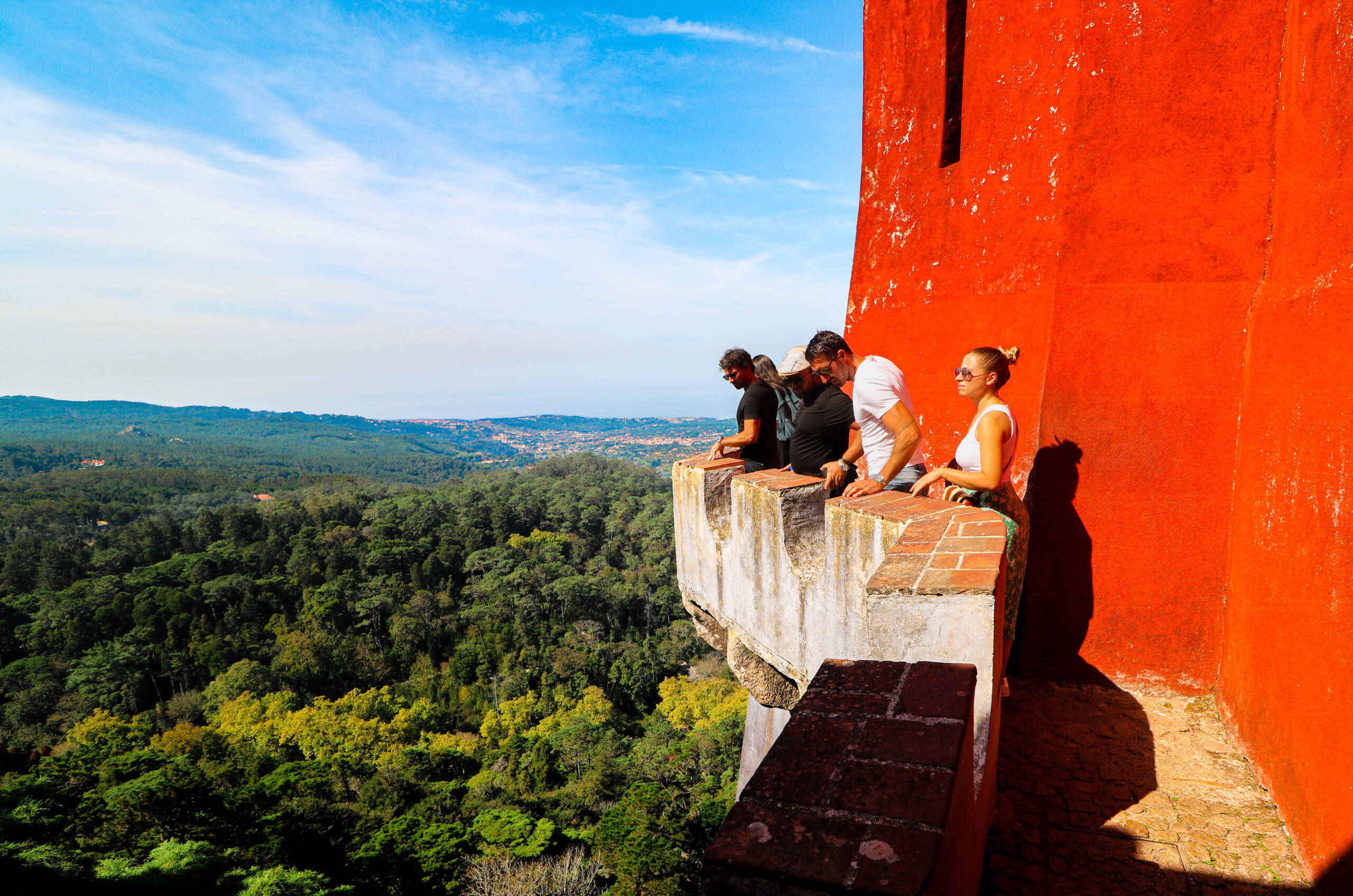
Pena Palace's Red Terrace and the Ruckenfigur Device Travel Posters Borrowed From Romantic Painting
Five people lean on a parapet at Pena, in Sintra, looking out over the forest toward the coast. Nobody faces the camera. You see the backs of heads, a shoulder, the angle of a jaw, and past them the whole Atlantic plain going hazy in the light. If that composition feels familiar before you can say why, it should. It is one of the oldest tricks in European landscape painting, and the poster trade ran on it for a hundred years.
Posts
The Prague Orloj's Calendar Dial Is a Copy of a Copy, and the Last One Changed the Faces
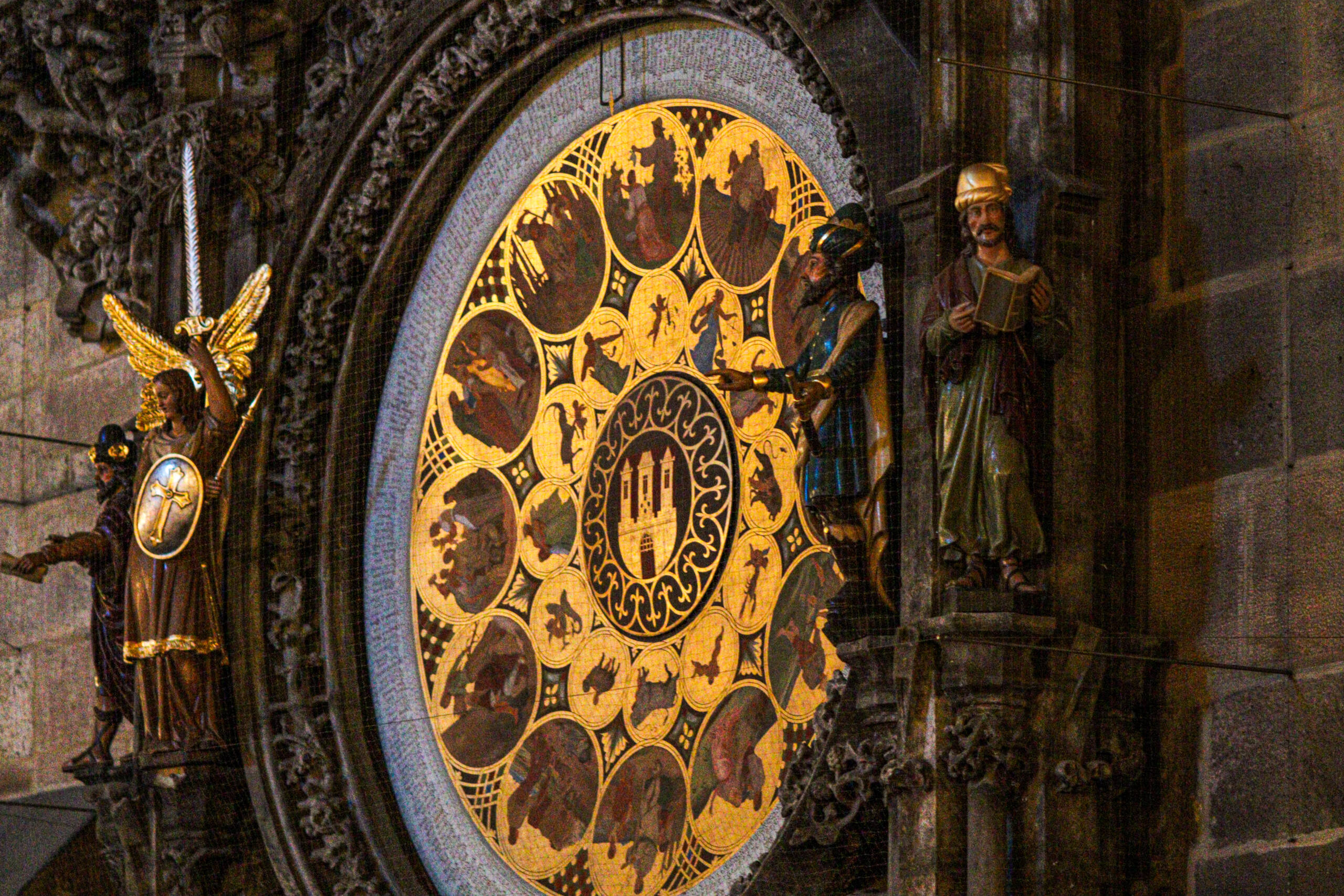
The lower dial of the Prague astronomical clock, lit up at night behind its bird netting. Twelve painted medallions of the months around the rim, twelve smaller zodiac roundels inside them, and the old town’s coat of arms sitting black and gold in the middle. An archangel with a sword on the left. A chronicler with an open book on the right. It looks like the most medieval object in central Europe.
Posts
The Met Cloisters Is a 1930s Building Made From Five Medieval Ones
Stand in one of the upper galleries and the room does all the work for you. Tall lancet windows throw cold daylight down a rough plaster wall. The roof is open timber. The floor is brick, worn to a warm red. A carved retable sits on a bracket at exactly the height an altarpiece would have sat, and a tapestry hangs beside it, and the whole arrangement reads as a room that has been standing since the fifteenth century.
Posts
Canaletto Framed This Rialto View First and Every Phone Still Copies It
Stand on the San Marco side of the Grand Canal, put the Rialto Bridge in the middle distance, let the palace fronts run away on both sides, and you have made a picture that was commercially standardised nearly three hundred years ago. The composition is not a discovery. It is an inheritance.
The veduta, the topographical city view, became a Venetian export industry in the first half of the eighteenth century.
Posts
Francis Picabia Painted Machinery in June 1914, Weeks Before the Machines Went to War
The wall label gives the date with unusual precision: Paris, June to July 1914. Francis Picabia was working on a canvas over eight feet tall, filling it with pistons, tubing, gears and flesh, while the Austrian archduke was shot in Sarajevo and the ultimatums began moving between capitals. He finished it, or stopped working on it, at roughly the moment Europe committed itself. Within weeks he was in uniform.
The painting is called I See Again in Memory My Dear Udnie, and it hangs at the Museum of Modern Art in New York.