Night Reportage
A rooftop becomes a stage, and the city below—scattered with amber lights and quiet movement—turns into the backdrop of something that feels immediate, almost urgent. The poster carries that tension well. At the center, a seated figure faces forward, his expression steady but alert, caught in that split second between listening and responding. Across from him, another man stands slightly turned away, his posture suggesting an ongoing exchange, something unfolding rather than concluded. It’s not posed, not polished—it feels like you walked into a live conversation already in motion.
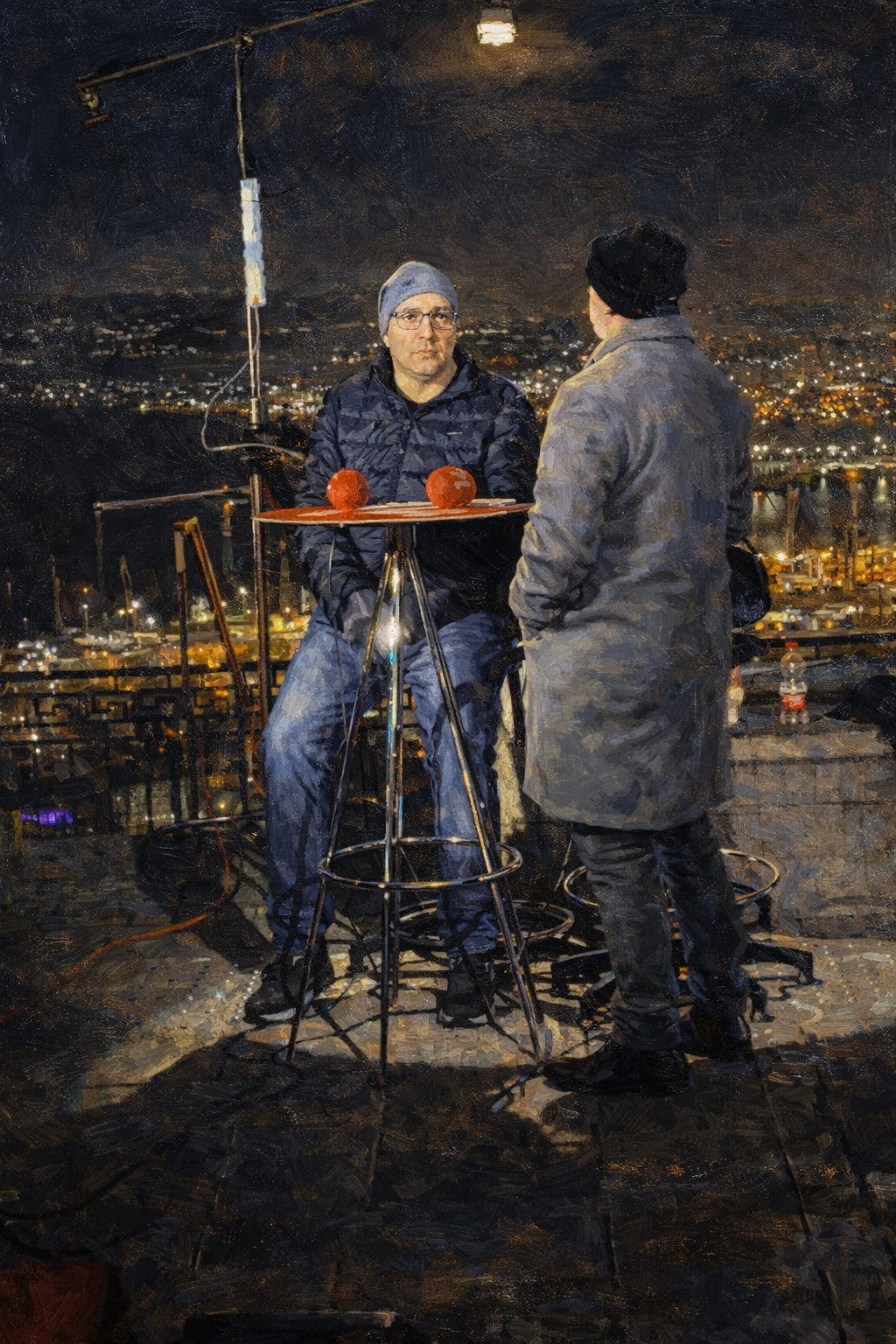
The lighting does most of the storytelling here. A single overhead source casts sharp highlights and long shadows, isolating the two figures from the surrounding darkness. You can almost feel the cold night air in the scene—the heavy jackets, the beanies pulled down just enough, the stiffness in their stance. And then there are those two red microphones on the small round table—bright, almost defiant dots of color that immediately signal broadcast, urgency, media presence. They anchor the composition in a way that feels deliberate, like the visual equivalent of a breaking headline.
The city behind them isn’t just background—it hums. Distant cranes, harbor lights, scattered windows, all slightly blurred and softened in that painterly texture, giving the sense that life continues down there while something important is being discussed up here. It’s a quiet contrast, but it works. The rooftop feels exposed, elevated, almost symbolic—like the conversation is meant to rise above the noise below.
Altogether, it lands somewhere between journalism and cinema. Not overly stylized, not overly raw—just enough texture, just enough realism, and just enough drama to make you pause for a second longer than you expected. And honestly, that’s probably the point.